
Last winter I pulled a loaf out of the oven that looked golden and tall. Then I sliced it. The top was soft, and the bottom inch was a heavy, gummy stripe. I’d used thawed bananas straight from the freezer bag, liquid and all. If you’ve ever stood over a cutting board asking “why is my banana bread dense?”, you’re in good company. I baked a few heavy loaves on the way to my classic banana bread, and every one of them taught me something.

Below are the 7 reasons banana bread turns dense or gummy, how to read your slice, and the simple fix for each one.
The quick answer: Banana bread turns dense or gummy when the batter is overmixed, there’s too much banana, or the flour was scooped instead of spooned. Old baking soda, unripe or watery bananas and slicing too soon do it too. Fold until the flour just disappears, measure your mashed banana, and let the loaf cool 30 minutes.
💌 Want more cozy banana recipes? Enter your email and I’ll send them straight to your inbox.
At a Glance: What Your Slice Is Telling You
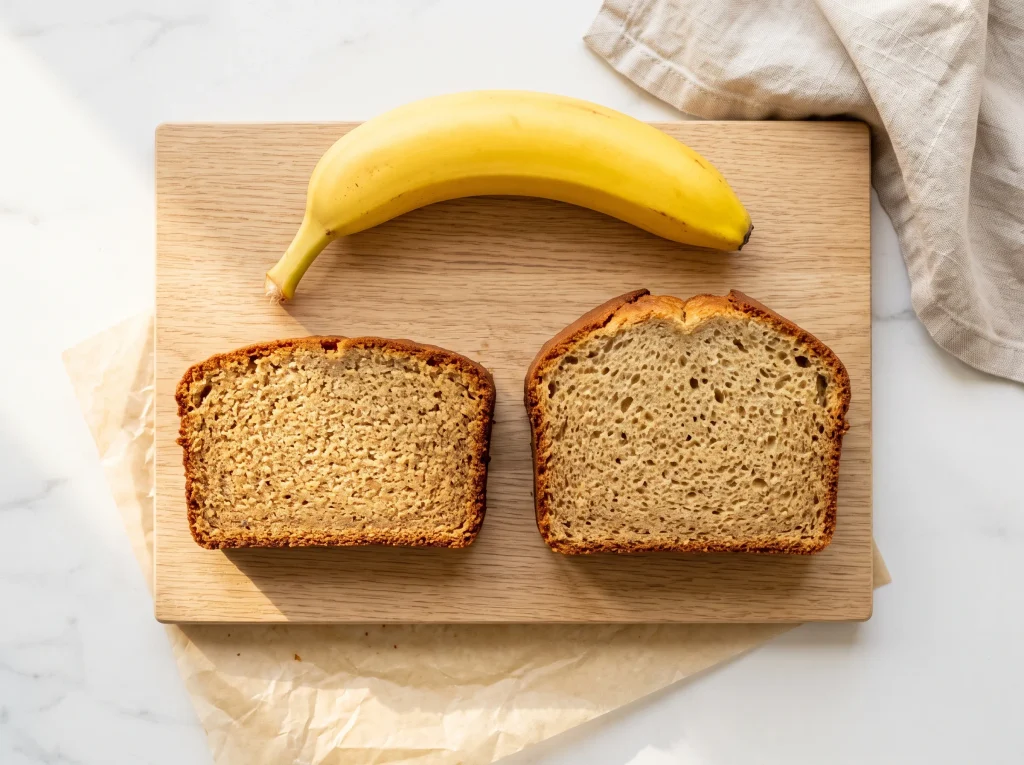
Before you change anything, look at the slice. Where the heavy part sits, and what the texture feels like, tells you what went wrong. One honest note first: banana bread should be moist and tender, not light like a sponge. If you love a tight, buttery crumb on purpose, that’s what a Southern banana pound cake is for.
| What you see | Most likely cause | Fix for next time |
|---|---|---|
| Dense and heavy all the way through | Overmixing or too much flour | Fold until the flour just disappears · spoon and level the flour |
| Gummy stripe along the bottom | Too much banana, or watery thawed bananas | Measure the mash · drain thawed bananas |
| Gummy, shiny center | Underbaked, or sliced while hot | Bake to 200–205°F (93–96°C) · cool 30 min |
| Tunnels and a pointy peak | Overmixing | Switch to a spatula once the flour goes in |
| Flat top, barely rose | Old baking soda, or soda and powder swapped | Test your leavening · use exactly what the recipe says |
| Rose, then sank in the middle | Too much leavening, or underbaked | Level your measuring spoons · test the center |
| Dry and crumbly | Overbaked or too much flour | Check early · weigh the flour |
| Pale, almost white crumb | Bananas not ripe enough | Use bananas with plenty of brown freckles |
Why Is My Banana Bread Dense? 7 Reasons and How to Fix Each
These are the causes I’ve run into in our kitchen, roughly in the order I see them. Most dense loaves have one or two of them, rarely all seven. Find yours, change that one thing next time, and keep everything else the same. That’s how to make banana bread less dense without guessing.
1. You Overmixed the Batter
Wheat flour builds gluten every time you stir. A little gives the loaf structure. Too much, and overmixed banana bread comes out tight, chewy and dense, with long tunnels running up through the crumb. Fold the flour in with a spatula, not a whisk, and stop the moment the last dry streak disappears. A slightly rough, lumpy batter is exactly right.
It shows even more in my banana bread muffins: overmixed muffins bake up with pointy peaks and holes inside. One exception: almond flour has no gluten, so a gluten-free batter can be stirred until smooth.
2. You Used Too Much Banana
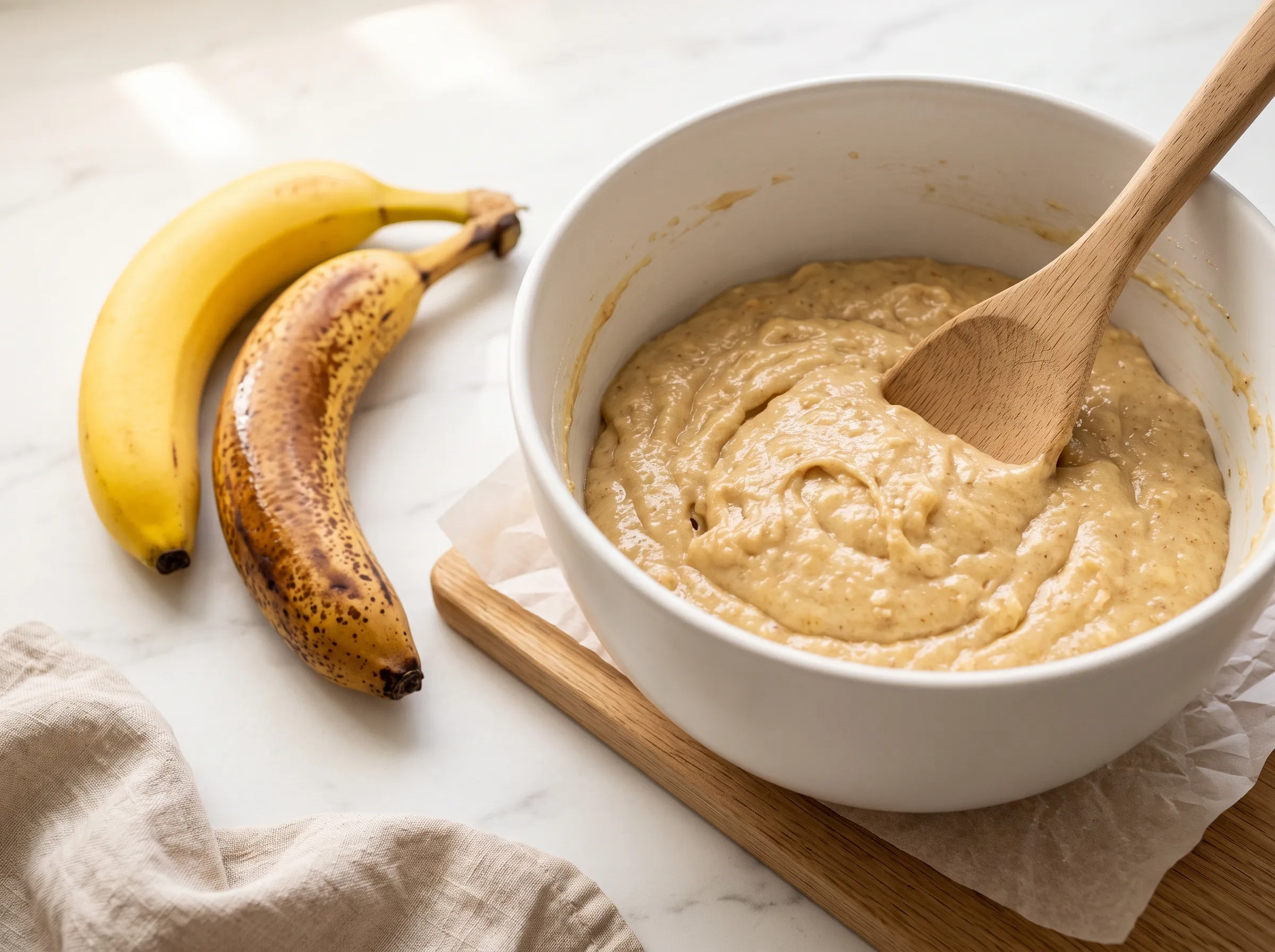
More banana sounds like more moisture, but too much banana in banana bread is just more water and sugar than the flour can hold. The loaf turns heavy and gummy, usually at the bottom. Measure the mash instead of counting bananas, because one large banana can give twice as much as a small one. My classic loaf uses 1 cup (230 g) of mashed banana for 2 cups (240 g) of flour. Here’s how I measure your mashed banana and get it smooth.
The same rule applies when you’re using banana instead of eggs: I never replace more than 2 eggs with banana, or the crumb gets heavy.

3. You Scooped the Flour (or Used the Wrong One)
Dipping the measuring cup straight into the bag packs in extra flour, and extra flour means a dense, dry loaf. Spoon the flour into the cup and level it with the back of a knife, or weigh it: 2 cups is 240 g in my classic loaf.
Gluten-free flours need the same care. In a gluten-free almond flour loaf, fine blanched almond flour gives a soft crumb, while coarser almond meal turns it dense and gummy. Check the bag before you start, and never add extra flour to firm up a batter that looks soft.
4. Your Baking Soda Is Old (or You Swapped It)
Baking soda needs an acid to work, and banana bread is full of them: ripe bananas, sour cream, brown sugar. Baking powder carries its own acid. The two aren’t interchangeable, so use exactly what your recipe calls for. My vegan banana bread uses both, and each one has its own job.
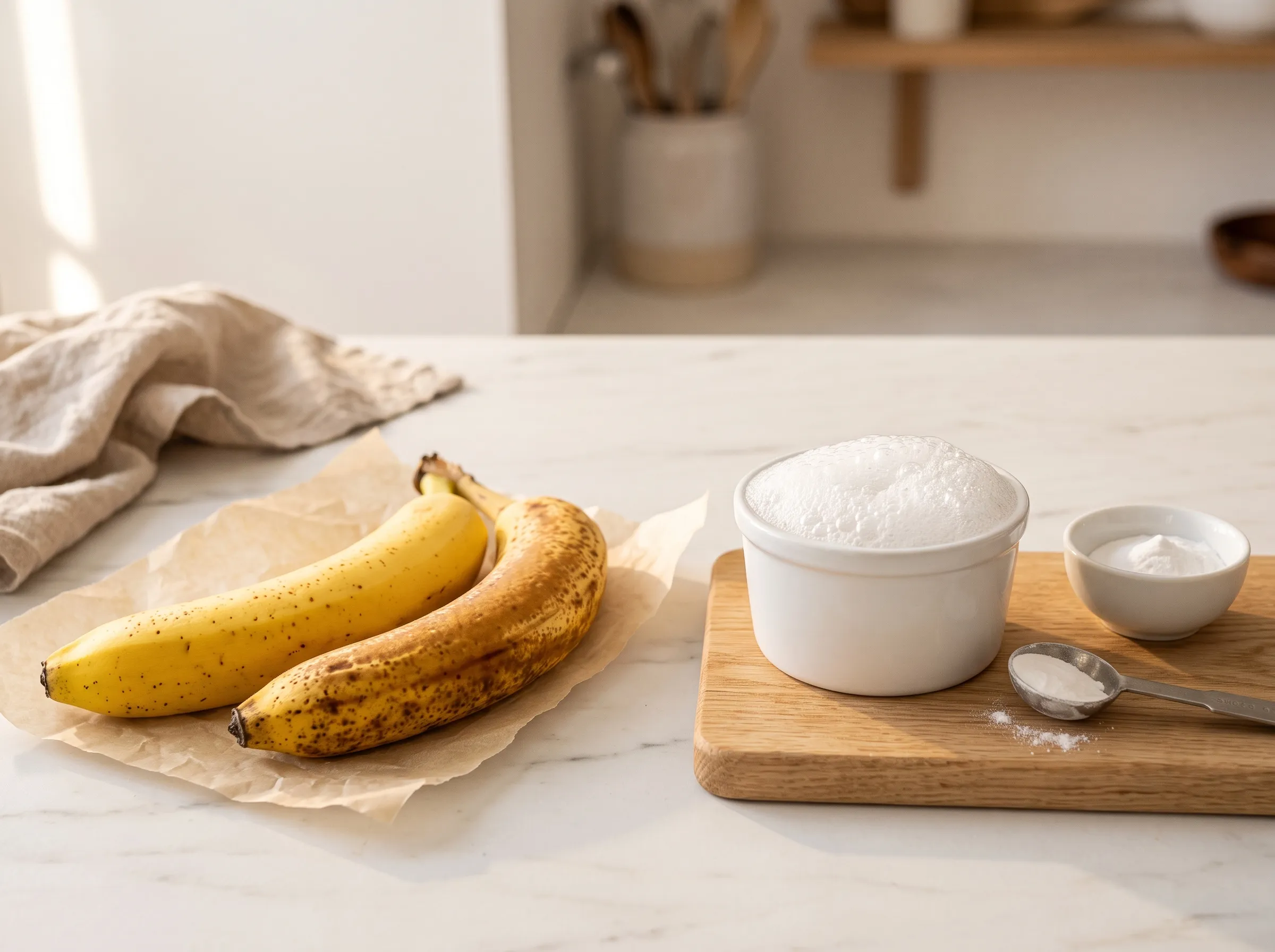
Old leavening is the sneaky one, because the box looks the same for years. Test your baking soda: drop 1/4 tsp into 1 tablespoon of vinegar. It should fizz right away. For baking powder, use hot water instead. No fizz, no lift.
5. Your Bananas Weren’t Ripe Enough
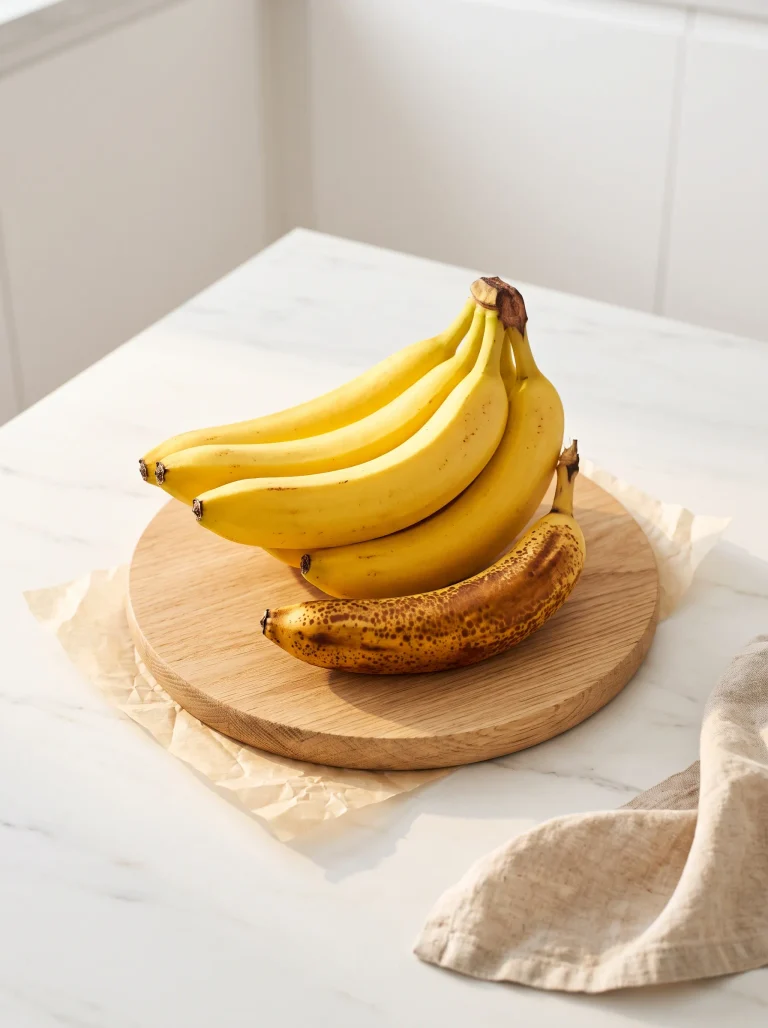
Yellow bananas are still starchy. They mash into lumps, bring less sugar and moisture, and give a dense, pale loaf that tastes more of flour than fruit. That’s also the usual answer when readers ask why their banana bread looks white inside. Use bananas with plenty of brown freckles. If yours aren’t there yet, I speed up ripening in the oven at 300°F (150°C) for 15 to 20 minutes.
6. Your Thawed Bananas Were Too Watery
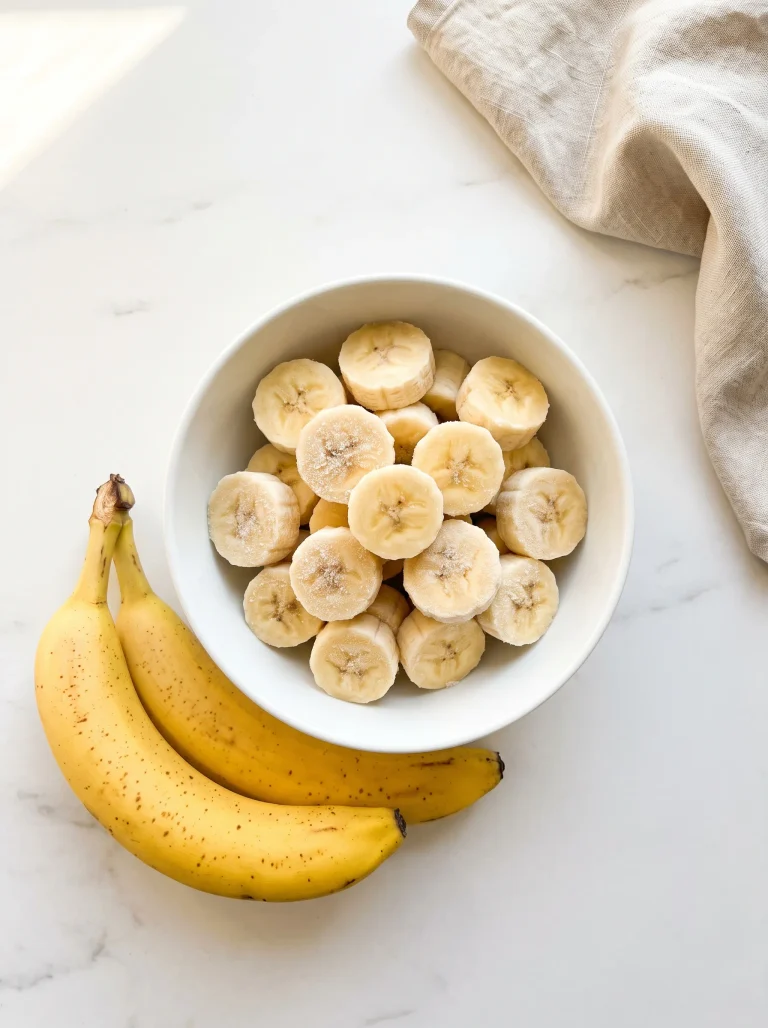
Frozen bananas release a surprising amount of liquid as they thaw. That’s exactly where my gummy stripe came from. Pour off most of the liquid, then measure the mash, so the batter gets banana instead of banana water. Here’s how I freeze and thaw bananas so they’re ready for baking.
7. You Sliced It Too Soon
A loaf keeps setting as it cools. Cut it hot, and the steam presses the crumb into a gummy center, even when it’s fully baked. Cool it 10 minutes in the pan, then at least 20 more on a wire rack. If the center still looks wet once it’s cool, it came out of the oven too early: next time, test the center of the loaf and pull it at 200–205°F (93–96°C).
Why Is My Banana Bread Gummy?
Gummy is dense’s wetter cousin: a tight, rubbery, slightly shiny crumb that sticks to the knife. If your loaf feels mushy in the middle or heavy at the base, where the gummy part sits tells you the cause.
A Gummy Stripe at the Bottom
A heavy band along the bottom means the batter held more liquid than it could set, so the wettest part sank and stayed dense. The usual suspects: thawed bananas with their liquid, too much banana, or cold eggs or milk that made the fat seize into an uneven batter. Measure the mash, drain thawed bananas, and bring everything to room temperature before you start.
Gummy vs Underbaked: How to Tell
Underbaked banana bread is wet and shiny in the center, and a toothpick comes out with batter on it. Gummy banana bread can be fully baked, at 200–205°F (93–96°C) inside, and still feel heavy and rubbery. If yours is soft and wet in the middle, it isn’t gummy, it’s raw: here’s how to tell if banana bread is done, and how to save it.
Can You Fix Gummy Banana Bread?
If it’s underbaked, yes. Return it to a 350°F (175°C) oven, tented loosely with foil, and check every 5 to 10 minutes. If it’s gummy but fully baked, the crumb won’t change. Slice it and toast the slices in a dry skillet or toaster until the edges crisp. Then fix the cause next time.
Fixes I Stopped Trusting
When a loaf comes out heavy, there’s no shortage of quick fixes online. I’ve tried most of them. These three made things worse in our kitchen.
“Just Add More Flour”
A loose batter is tempting to thicken. But extra flour is cause number 3 in disguise: the loaf comes out dense and dry instead of gummy. If your batter is very runny, the real problem is usually too much banana or liquid, so measure those next time.
“Bake It Hotter”
Turning the oven up doesn’t cook the middle faster. It browns the outside first, and the center stays heavy. I stick to 350°F (175°C) and lay a sheet of foil over the top if it browns early.
“Beat It Smooth With a Mixer”
A stand mixer gives you a silky batter, and a tough loaf. Banana bread is a one-bowl, fork-and-spatula bake. The rough, lumpy batter is the good one.
What Banana Bread Batter Should Look Like
The batter tells you a lot before it ever goes in the oven. Here’s the consistency I look for, and what to do when it’s off.
Is Banana Bread Batter Supposed to Be Thick?
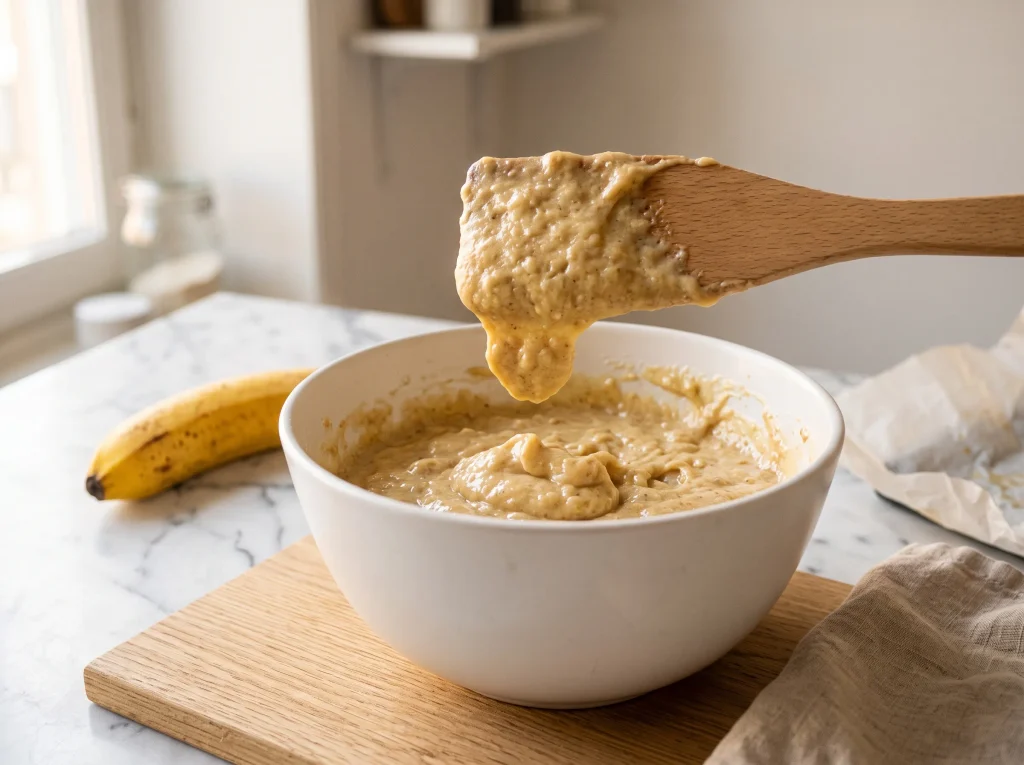
Yes. Banana bread batter should be thick, scoopable and a little lumpy, more like a soft muffin batter than a pourable cake batter. Lifted on a spatula, it should drop off in slow, heavy dollops, not run off in a ribbon. Almond flour batters are even thicker, and that’s normal.
Banana Bread Batter Too Thick or Too Runny?
- Stiff, like cookie dough: too much flour. Fold in 1 to 2 tablespoons of milk or sour cream, and spoon and level the flour next time.
- Thin and pourable: too much banana or liquid. Bake it as is, expect a few extra minutes, and check the center with a thermometer.
- Greasy, with streaks of fat: cold eggs or milk made the fat seize. Next time, take them out 20 to 30 minutes ahead.
Why Didn’t My Banana Bread Rise?
A flat, squat loaf is usually a leavening problem, sometimes an overmixing one. First, it helps to know what a normal rise looks like.
How Much Does Banana Bread Rise?
Banana bread is a quick bread, so it only rises in the oven, and it won’t double like a yeast loaf. Filled about three-quarters full, a 9×5-inch (23×13 cm) pan should rise to around the rim, with a domed top and one crack down the center. If yours stayed low and flat, check your leavening first (cause 4).
Do You Need Baking Soda for Banana Bread?
In most recipes, yes. Baking soda reacts with the acid in ripe bananas and gives the loaf its lift. It also helps the crust and crumb brown, which is why a loaf without enough soda can look pale. If a recipe uses only baking powder, like many almond flour loaves, follow it: it was balanced that way.
Too Much Baking Powder: Why Banana Bread Sinks
More leavening doesn’t mean more rise. Too much makes the batter rise fast, then collapse in the middle before the crumb sets, leaving a sunken, coarse loaf. Too much baking soda can also taste soapy or metallic. Level your measuring spoons with a knife, and if your loaf sank, also make sure it wasn’t underbaked.
Why Is My Banana Bread Dry or Crumbly?
Dry banana bread is the opposite problem, and it’s usually easier to rescue. Here’s what causes it and what I do with a dry loaf.
What Makes Banana Bread Dry
- Overbaking. A few minutes past 205°F (96°C) dries the edges fast.
- Too much flour. Scooped flour, again.
- Cutting the fat. Butter, oil and sour cream keep the crumb tender. Reduce them, and the loaf dries out.
- Unripe bananas. Less sugar and moisture means a drier crumb.
- Storing it uncovered. An unwrapped loaf dries out in a day or two. Here’s how I store banana bread so it stays soft.
Crumbly slices usually come from cutting the loaf warm, or from gluten-free loaves without enough fat to hold the crumb together.
How to Fix Dry Banana Bread
Warm a slice for 15 to 20 seconds in the microwave and spread it with butter, or toast it in a skillet. For a whole dry loaf, cube it and turn it into an old-fashioned banana bread pudding: the custard soaks right in. French toast works beautifully too.

Banana Bread Ratios That Keep the Crumb Tender
If you’re adapting a recipe, compare it with mine. These are the ratios from three of my loaves, all baked in a 9×5-inch (23×13 cm) pan at 350°F (175°C).
| Loaf | Mashed banana | Flour | Leavening | Fat | Bake time |
|---|---|---|---|---|---|
| Classic banana bread | 1 cup (230 g) | 2 cups (240 g) all-purpose, spooned and leveled | 1 tsp baking soda | 1/2 cup (115 g) melted butter + 1/2 cup sour cream | 70 min |
| Vegan banana bread | About 1 1/4 cups (300 g) | 2 cups (250 g) all-purpose | 1 tsp baking powder + 1/2 tsp baking soda | 1/3 cup (80 ml) oil | 50–60 min |
| Almond flour banana bread | 1 1/2 cups (340 g) | 2 cups (192 g) blanched almond flour | 2 tsp baking powder | 1 tbsp oil + 3 eggs | 50–55 min |
My rule of thumb for all-purpose flour: about 1 cup (230 g) of mashed banana and 1 tsp baking soda for 2 cups (240 g) of flour. If a recipe uses much more banana than that, like 2 cups of banana for 2 cups of flour, expect a heavier, wetter loaf.
Lily’s Tips for Soft, Tender Banana Bread
These small habits are what keep my loaves soft. None of them takes more than a minute.
- Bring eggs and milk to room temperature. Cold eggs seize melted butter, and cold plant milk firms up oil. Take them out 20 to 30 minutes ahead.
- Weigh your flour if you can. A kitchen scale ends the scoop-or-spoon question for good.
- Switch to a spatula once the flour goes in. Whisk the wet ingredients, fold the dry ones.
- Chop mix-ins finely. Big walnut chunks sink to the bottom and weigh the loaf down.
- Learn the whole picture. From ripeness to mixing, everything else I’ve learned is in my complete guide to baking with bananas.
Brown-spotted bananas contain up to 80% more natural sugar than yellow ones. That sugar holds on to moisture, which is why ripe bananas give a softer crumb.
“The banana bread is not done baking when it comes out of the oven — it finishes as it cools.” — Lily
Next Step: Test the Center Before You Slice
Fixing the batter is half the job. The other half is taking the loaf out at the right moment. Before your next bake, read the 4 tests I use to know when banana bread is done. It takes 30 seconds and saves the loaf.
Dense Banana Bread FAQ
These are the questions I hear most from readers after a heavy loaf. Here are the short, honest answers.
The most common cause is overmixing after the flour goes in, which builds gluten and tightens the crumb. Too much flour, too much banana, old baking soda and unripe bananas also make banana bread dense. Fold until the flour just disappears, and spoon and level your flour.
Banana bread turns gummy when the batter holds more liquid than it can set: too much banana, watery thawed bananas or cold ingredients. Slicing it hot also presses the crumb together. If the center is wet and shiny, it’s underbaked: bake it to 200–205°F (93–96°C).
Yes. Banana bread batter should be thick, scoopable and slightly lumpy, dropping off a spatula in slow dollops. If it’s stiff like cookie dough, there’s too much flour. If it’s thin and pourable, there’s too much banana or liquid.
Most banana bread recipes need baking soda: it reacts with the acid in ripe bananas to lift the loaf and help it brown. Don’t swap it for baking powder 1:1. Some gluten-free recipes use only baking powder, so follow the recipe you’re baking.
Warm slices for 15 to 20 seconds in the microwave and add butter, or toast them in a skillet. A whole dry loaf makes a lovely banana bread pudding or French toast. Next time, check the loaf early and spoon and level your flour.
Yes. Too much banana adds more water and sugar than the flour can hold, and the loaf turns heavy and gummy. Measure the mash instead of counting bananas. My classic loaf uses 1 cup (230 g) of mashed banana for 2 cups (240 g) of flour.
💌 Love this guide? Subscribe to get our cozy banana recipes every week.
From Dense to Soft: Your Next Banana Bread Starts Here
A dense loaf isn’t a failure. It’s a clue. Look at the slice, find the cause, and change one thing next time. Your next banana bread will be the soft one.
If you try these fixes, I’d love to hear how your loaf turned out. Tag me on Instagram @eatwithmellow or leave a comment below. Start with the soft, golden loaf I bake every weekend, or browse all my banana recipes, from cozy breads to 5-minute smoothies.
Love, Lily 🍌

Want to save this recipe?