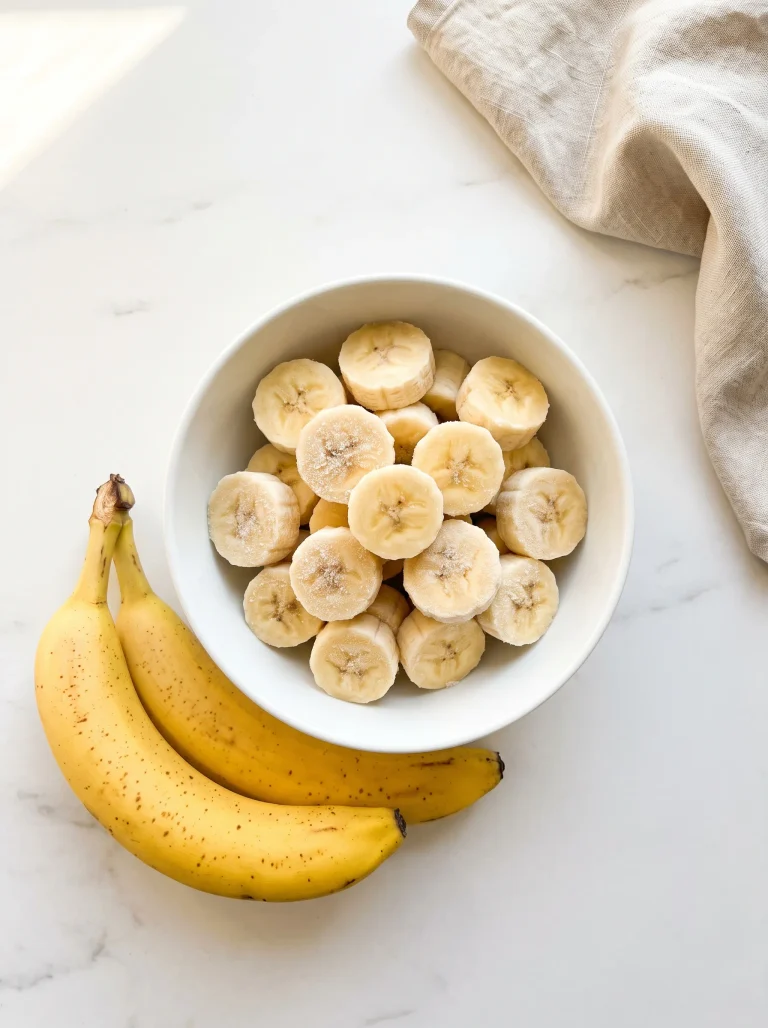

Every Sunday I buy one big bunch of bananas for the week’s lunchboxes. By Wednesday half of them are freckled, and by Friday the last two are sliding toward brown. For years I just baked my way out of it (which is how my classic banana bread became a weekly thing).
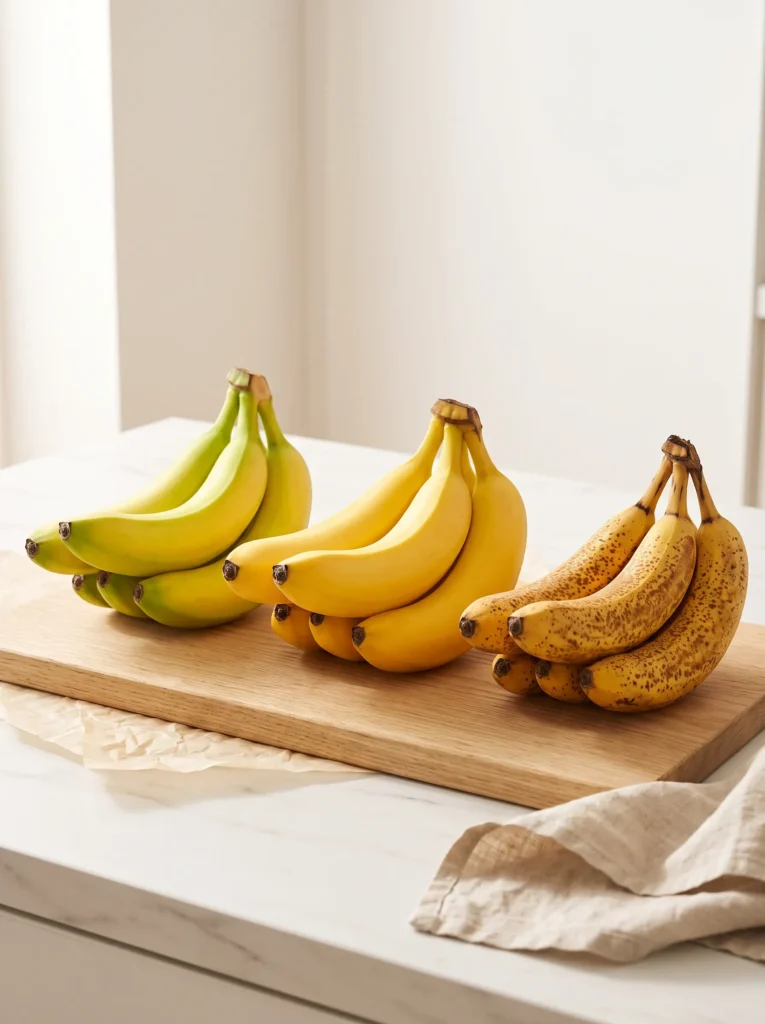
Then I finally looked into how to store bananas properly, and now the bunch lasts the whole week. Here’s what I do at every stage: on the counter, in the fridge and once a banana is cut. Plus the viral hacks that really help, and the ones that don’t.
The quick answer: Keep bananas on the counter at room temperature, around 68°F (20°C), away from apples and avocados, until they’re as ripe as you like. Then move them to the fridge. The peel turns brown, but the flesh stays good for about 3 more days. For anything longer, freeze them.
💌 Want more cozy banana recipes? Enter your email and I’ll send them straight to your inbox.
Banana Storage at a Glance
Where a banana should live depends on how ripe it is. Warm air speeds ripening up, cold air slows it down. Here’s the short version I keep in my head every week.
| Ripeness stage | Where to store it | How long it keeps | My tip |
|---|---|---|---|
| Green or green-tipped | Counter, away from other fruit | Until it turns yellow | Never in the fridge yet |
| Yellow | Counter, bunch kept whole | 3 to 7 days at 68°F (20°C) | Hang it, or wrap the crown |
| Freckled and ripe | Fridge | About 3 more days | The peel darkens, the inside doesn’t |
| Cut or half-eaten | Fridge, cut side covered | 1 to 2 days | A little lemon juice on the cut end |
| Too ripe to eat soon | Freezer, peeled | 8 to 12 months | Ideal for baking and smoothies |
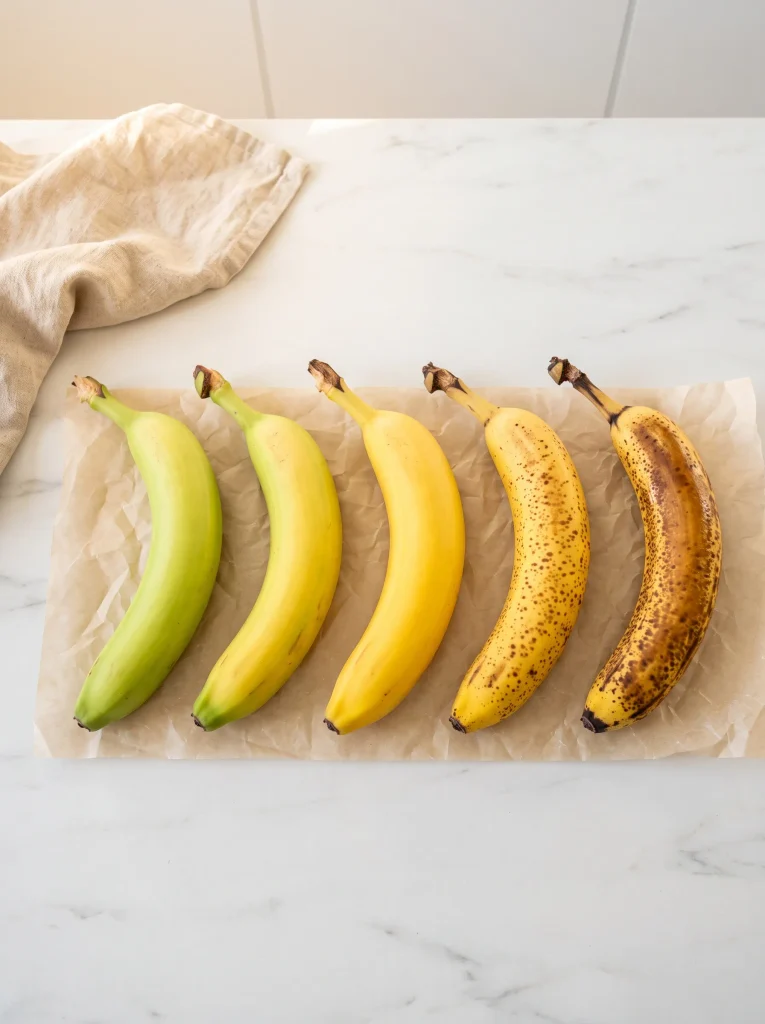
How to Store Bananas, Stage by Stage
Bananas keep ripening after they’re picked, and they do it by giving off a natural gas called ethylene. Warmth speeds that process up, and cold slows it down. Match the spot to the stage and you’ll throw away far fewer bananas.
Green Bananas: The Counter, Away From Other Fruit
Leave green bananas on the counter at room temperature, out of direct sun and away from the stove or dishwasher. Keep them apart from apples, avocados and tomatoes, which give off the same ripening gas.
Don’t put green bananas in the fridge. Virginia Tech’s food storage guide warns that unripe bananas darken quickly in the cold, and they never ripen properly afterward. The inside stays starchy and bland, which is the opposite of what we want for baking.
Yellow Bananas: Keep the Bunch Together
Once they turn yellow, bananas keep about 3 to 7 days on a counter at 68°F (20°C), according to the European Food Information Council. Keep the bunch whole, and hang it if you can so the bananas don’t rest on their soft sides and bruise. Wrapping the crown can help a little too. You’ll find what the real tests say about both in the hacks section below.
Freckled, Ripe Bananas: Move Them to the Fridge
Brown freckles mean the starch has turned into natural sugar. This is the sweetest moment for eating, and the moment to slow things down. Move the bananas you won’t eat in the next day or two into the fridge, and read the next section before you panic about the peel.
The Best Temperature to Store Bananas
Bananas are tropical fruit, and they’re fussy about cold. UC Davis postharvest researchers recommend 56 to 58°F (13 to 14°C) for storing them in shipping, and ripening happens best around 59 to 68°F (15 to 20°C). Below 56°F (13°C), the peel gets damaged by cold.
At home, that means:
- Counter: a cool spot around 65 to 70°F (18 to 21°C) is realistic and works well.
- Fridge: 37 to 40°F (3 to 4°C) is too cold for green bananas, but fine for the inside of a ripe one.
- Avoid: sunny windowsills, the top of the fridge and the spot next to the oven, which all run warm.
Can You Refrigerate Bananas? (Yes — Here’s What Really Happens)
This is the question almost everyone asks about banana storage, and the answer surprised me the first time I tried it. Yes, you can refrigerate bananas. The trick is timing, and knowing that the peel will look worse than the fruit really is.

Should You Put Bananas in the Fridge?
Yes, but only once they’re ripe. A yellow banana with a few freckles is ready for the fridge. A green one isn’t: Utah State University Extension explains that bananas refrigerated before they ripen won’t ripen properly. So ripen on the counter first, then chill.
Why Bananas Turn Brown in the Fridge
The cold damages the cells of the peel. Once those cells break, natural enzymes inside react with oxygen and turn the skin brown, then dark chocolate brown, usually within a day or two. It’s the same kind of cold damage UC Davis describes below 56°F (13°C).
The flesh is protected by the thick peel, so it stays pale, creamy and sweet. Utah State says the same thing plainly: the outside turns brown in the fridge, but the fruit is still fresh.
Do Bananas Last Longer in the Fridge?
Yes. The fridge slows the ripening of the flesh, so a ripe banana holds its texture for a few extra days. Virginia Tech’s storage guide gives about 3 days in the fridge, and that’s a good, safe number to plan around.
Here’s the honest part: the fridge only works on ripe bananas. When The Kitchn put yellow, spotless bananas in the crisper drawer for 6 days, they came out firm but starchy and green-tasting. Same fridge, wrong stage.
How to Store Bananas in the Fridge
- Wait until the bananas are yellow with a few brown freckles.
- Keep them whole and unpeeled. The peel is their protection.
- Place them on a fridge shelf. Skip the sealed bag, which can trap moisture.
- Eat them fresh within about 3 days, and don’t let the dark peel fool you.
- Bake or blend any that feel soft after that. Dark-peeled fridge bananas are wonderfully sweet.
How to Keep Bananas From Ripening Too Fast
Slowing bananas down comes down to three things: cooler air, less ripening gas and good timing. (If you need the exact opposite, here’s how to ripen bananas quickly.) These are the habits that make the biggest difference, from most to least helpful.
- Buy a mix. I pick a few green-tipped bananas and a few yellow ones, so they’re ready on different days.
- Keep them cool. Choose the coolest spot on your counter, away from the oven, the dishwasher and direct sun.
- Keep other fruit away. Apples, avocados and tomatoes give off ethylene, the gas that tells bananas to ripen.
- Keep the bunch whole. Snapping bananas off early can make them ripen faster, not slower (more on that below).
- Chill the ripe ones. Once a banana has freckles, the fridge is your best tool.
Viral Banana Storage Hacks: What Works and What Doesn’t
Social media is full of banana tricks, and some of them hold up better than others. I went looking for real side-by-side tests, not just claims, and the results were honestly mixed. Here’s what the evidence says, and what I do in my own kitchen.
Wrapping the Stems: Foil, Plastic Wrap or a Silicone Cap
The idea: the stem is one place where ripening gas escapes, so covering it should slow the bunch down.
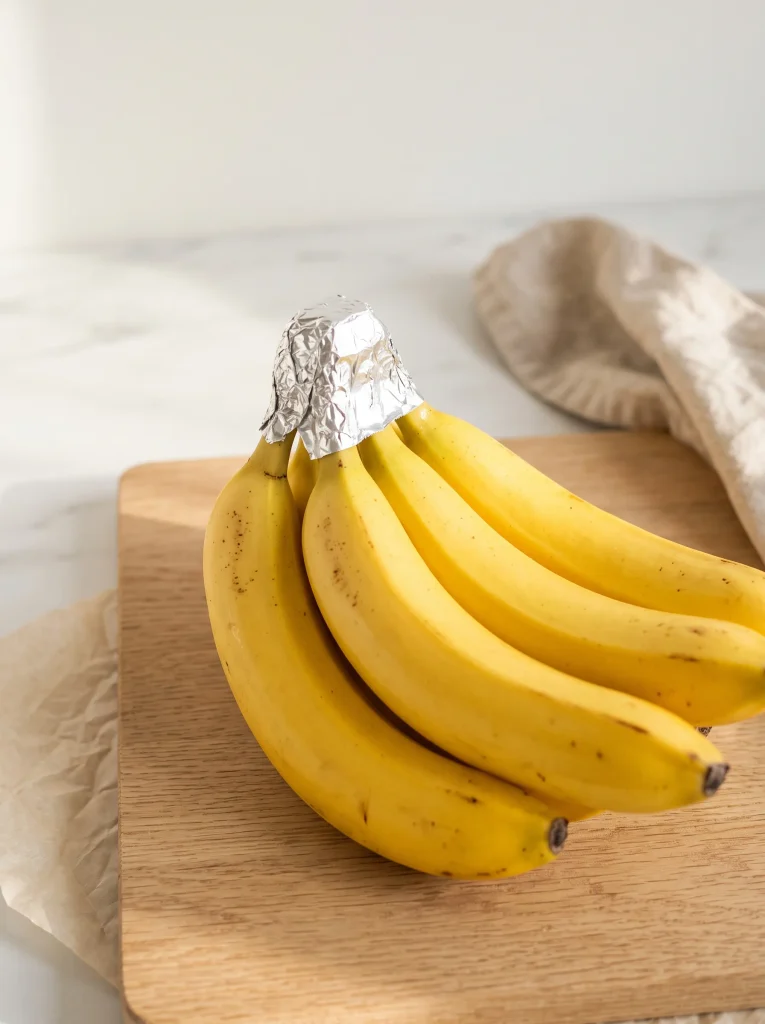
- What worked: In The Kitchn’s 6-day test on yellow bananas, foil wrapped around the crown came out on top, with firm bananas and just tiny freckles. Plastic wrap did well too. The European Food Information Council also recommends covering the top of the bunch with cling film.
- What didn’t: In a 5-day home test on green bananas, My Kitchen Garden found that wrapped and unwrapped bananas ripened at almost the same speed.
My honest take: it helps a little, mostly on bananas that are already yellow. The whole banana ripens, not only the stem, so don’t expect miracles. If you’d rather not toss a square of foil every week, there are reusable silicone caps, like NANA HATS (affiliate link — I may earn a small commission at no extra cost to you), that cover the crown the same way. I haven’t found an independent test of them yet, so treat them like foil: a small help, not magic.
Hanging Bananas
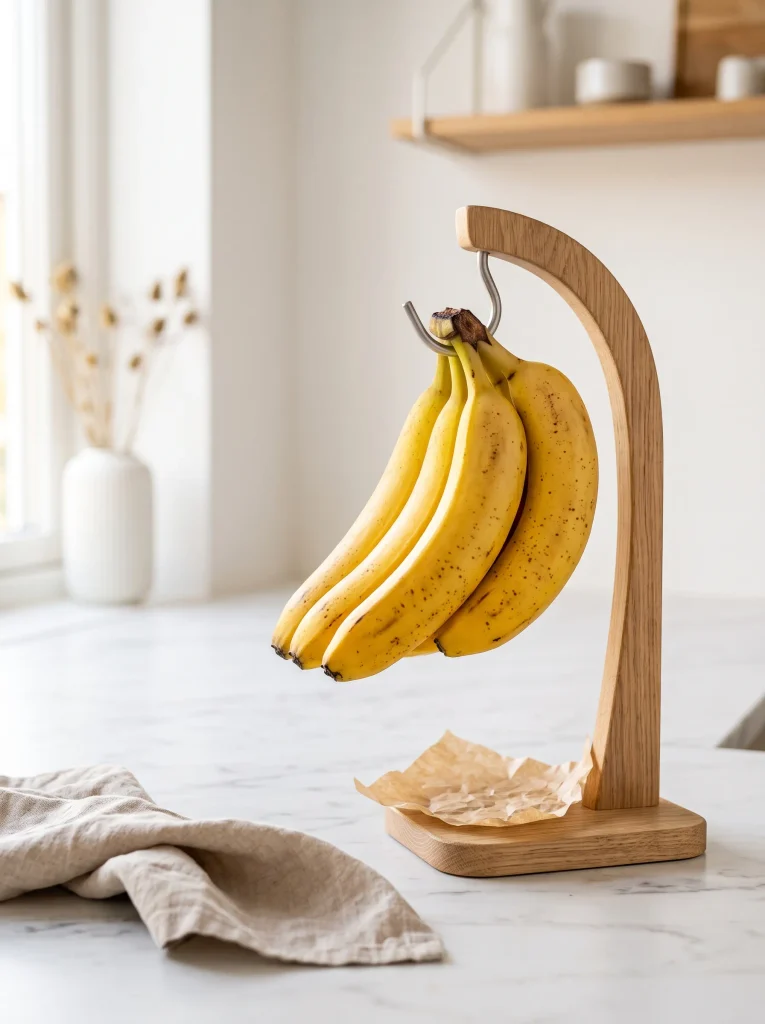
A banana hanger, or a simple hook under a cabinet, keeps the bunch in the air. The main benefit is fewer bruises: bananas resting on a counter get soft, brown patches where they touch it. In The Kitchn’s test, hanging bananas scored as well as the plastic-wrapped ones.
It won’t slow ripening much by itself. But if your bananas always get bruised on the bottom, it’s a simple fix.
Separating the Bunch
Many storage tips say to pull bananas apart so they ripen more slowly. The only real test I found says the opposite: in My Kitchen Garden’s side-by-side test, the separated bananas ripened faster than the ones left on the bunch. Snapping them off also tears the peel at the neck.
So I keep my bunch whole and only break off a banana when someone’s going to eat it.
The Sealed Plastic Bag
This one surprised me. In The Kitchn’s test, bananas sealed in a plastic produce bag kept bright yellow skins and a creamy texture after 6 days. It’s a single test, though, and a sealed bag can trap moisture, which invites mold around the stem.
If you try it, check the bag every day and open it at the first sign of condensation. It isn’t my go-to, but it’s worth knowing about.
The Banana-Stem-in-Water Jar
Standing a banana bunch in a jar of water like a bouquet of flowers is all over short videos. I couldn’t find a single real test showing it works. Picked bananas don’t drink through their stems like cut flowers, and a stem sitting in water stays damp, which is exactly what mold likes.
This is one hack I skip.
How to Keep Bananas From Turning Brown
“Brown” means two different things with bananas. Freckles on the peel are a normal sign of ripening. Brown on cut flesh is a reaction with the air. Here’s how to handle both, and how to save that half banana your kid left on the plate.
Why Bananas Turn Brown
- On the peel: as a banana ripens, its starch turns into sugar and the peel develops brown freckles. That’s ripeness, not spoilage. Cold does the same thing faster, as we saw with the fridge.
- On cut flesh: slicing a banana breaks open its cells, and natural enzymes react with oxygen in the air. Within minutes, the surface starts to turn brown.
The brown flesh is safe to eat. It just looks a little tired.
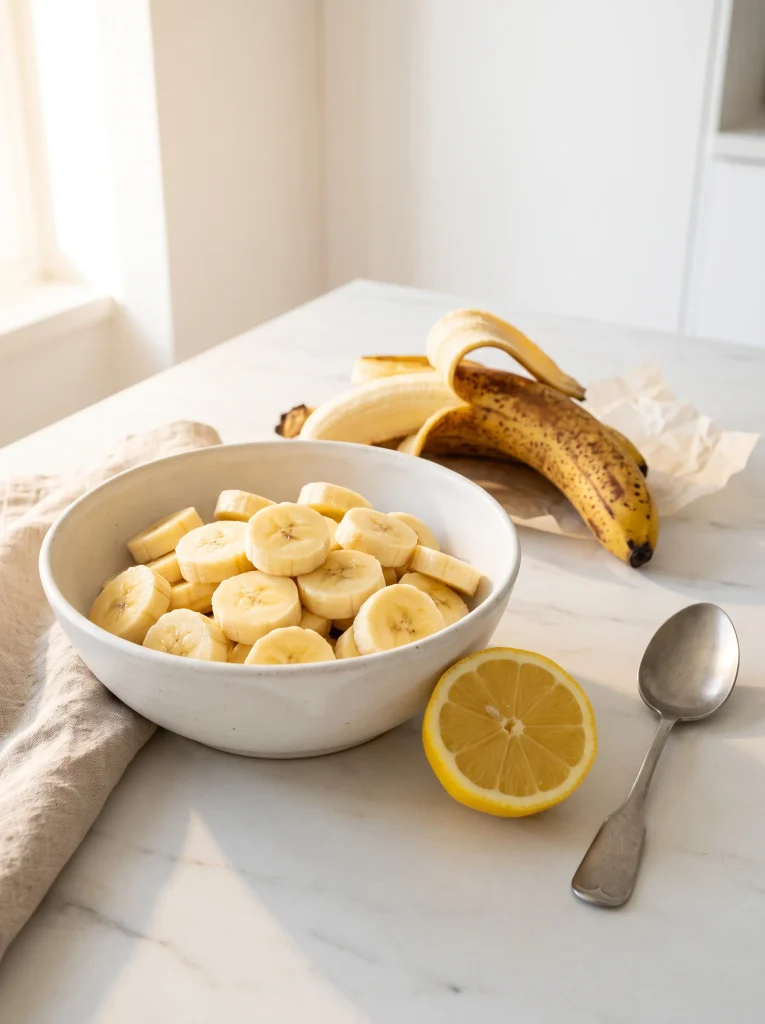
How to Keep Cut Bananas From Browning
Acid slows that browning reaction down. The University of Nebraska–Lincoln suggests coating cut fruit in an acidic juice, or in diluted honey. Here’s how I do it:
- Lemon or lime juice: toss the slices in a little juice, or brush it on the cut end. It works best, but you can taste it.
- Pineapple or orange juice: gentler and sweeter. This is my pick for fruit salad.
- Honey water (no lemon needed): stir 2 tablespoons of honey into 1 cup of water and toss the slices in it.
- Cut as late as you can. Nothing beats slicing right before serving.
This matters most in layered desserts. For layered banana pudding, I slice the bananas right before I build the layers, and the custard covers them from the air. For a make-ahead banana split cake, I give the slices a quick toss in pineapple juice first.
UNL also reminds us that cut fruit shouldn’t sit out at room temperature for more than 2 hours in total. After that, it goes in the fridge.
How to Store Half a Banana
- Cut, don’t peel, the banana, so the half you keep still has its peel on.
- Brush the cut end with a little lemon juice.
- Cover the cut end tightly with plastic wrap, beeswax wrap or foil.
- Refrigerate it and use it within 1 to 2 days.
If the very top has darkened, trim off a thin slice. Everything underneath will be fine. Leftover halves are also great in a smoothie the next morning.

How to Preserve Bananas Longer
Sometimes the bunch is simply ahead of you. When that happens, don’t try to store them longer: change their form instead. These are the three ways I rescue bananas before they go too far.
Freeze Them
Freezing is the only way to keep bananas for months. Peel them first, then freeze them whole, in halves or in slices. The European Food Information Council gives 8 to 12 months for the best quality. For thawing, the best containers and my favorite tricks, see my full guide on how to freeze bananas. My kids’ favorite way to eat them frozen is as frozen banana popsicles.
Dry Them Into Chips
Thin slices baked low and slow turn into a crunchy snack that keeps in a jar for weeks. My crispy baked banana chips are a good use for bananas that are ripe but still firm.
Blend or Bake Them Today
Very ripe, dark-peeled bananas are at their sweetest. Blend two into a creamy banana smoothie for breakfast, or mash them into your favorite bake. No added sugar needed.
How Long Do Bananas Last?
How long a banana keeps depends on where it lives and how ripe it is. These are the numbers I work with, all from the sources in this guide. If you want to recognize each ripeness stage at a glance, my banana ripeness guide walks through them one by one.
- Yellow bananas on the counter at 68°F (20°C): 3 to 7 days
- Ripe bananas in the fridge: about 3 extra days (the peel darkens, the flesh stays good)
- Cut banana at room temperature: no more than 2 hours
- Half a banana, cut end covered, in the fridge: 1 to 2 days
- Peeled bananas in the freezer: 8 to 12 months for the best quality
Lily’s Tips
After years of Sunday bunches and Friday rescues, these are the small habits that really changed how long my bananas last.
- Buy two stages at once. A few green-tipped, a few yellow. They’ll be ready on different days.
- Rinse and dry them when you get home. McGill University’s Office for Science and Society suggests a quick wash to remove any fruit fly eggs from the peel. Dry them well afterward.
- Don’t judge a fridge banana by its peel. Peel it before you decide. It’s almost always golden inside.
- Freeze before it’s too late. The moment a banana is more brown than yellow and you have no plans for it, peel it and freeze it.
- Banana bread is a different story. Once it’s baked, the rules change. Here’s how to store banana bread so it stays moist.
📊 Bananas are the world’s most popular fruit — over 100 billion eaten every year. That’s a lot of bananas worth storing well.
“I always say: the blacker the banana, the better the bread.” — Lily
Too Ripe to Store? Freeze Them or Bake Them
There comes a point where storing isn’t the answer anymore. When the peel is more brown than yellow and the fruit feels soft, stop trying to make it last and start using it. Those are the sweetest, most flavorful bananas you’ll ever have.
Freeze a few for later with my guide to freezing bananas, or pick something from all my banana recipes and bake today. Either way, nothing goes to waste.
How to Store Bananas: Your Questions Answered
These are the questions I hear most from friends, readers and other parents at school pickup. Each answer is short, so you can find yours fast and get back to your bananas.
No, as long as they’re ripe. The fridge slows down ripening and keeps the flesh good for about 3 extra days. The peel turns dark brown, but that’s only cosmetic. Just don’t refrigerate green bananas: they won’t ripen properly afterward and stay starchy.
No, the fridge slows ripening down. It only looks faster because cold damages the peel, which turns dark within a day or two. Inside, the flesh ripens much more slowly than it would on the counter and stays firm and sweet.
No counter or fridge trick keeps a banana fresh for 15 days. Your best combination: ripen it on the counter (3 to 7 days), then move it to the fridge (about 3 more days). For anything longer, peel and freeze it: frozen bananas keep for months.
Rinse and dry bananas when you bring them home, then move ripe ones to the fridge instead of leaving them in the fruit bowl. Empty the compost often. If flies show up, a jar of apple cider vinegar with a few drops of dish soap, covered with pierced plastic wrap, traps them.
💌 Love this guide? Subscribe to get our cozy banana recipes every week.
Keep It Simple, Keep Them Golden
You don’t need special gadgets to make a bunch of bananas last all week. A cool spot, a whole bunch and a little patience with the fridge will get you most of the way. And when they do get away from you, that’s just a sign it’s time to bake.
Tell me your own banana storage tricks: tag me on Instagram @eatwithmellow or leave a comment below. If your bananas are already freckled, start with my classic banana bread, or browse all my banana recipes.
Love, Lily 🍌

Want to save this recipe?